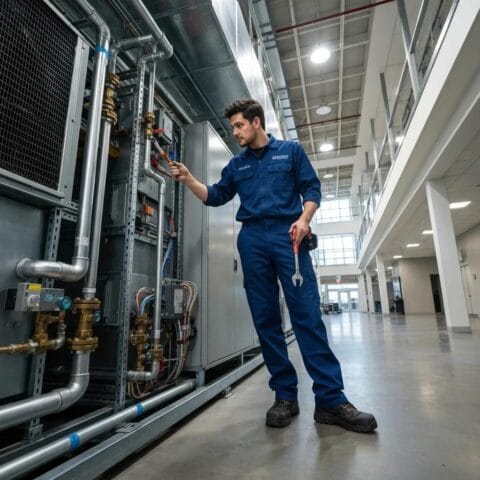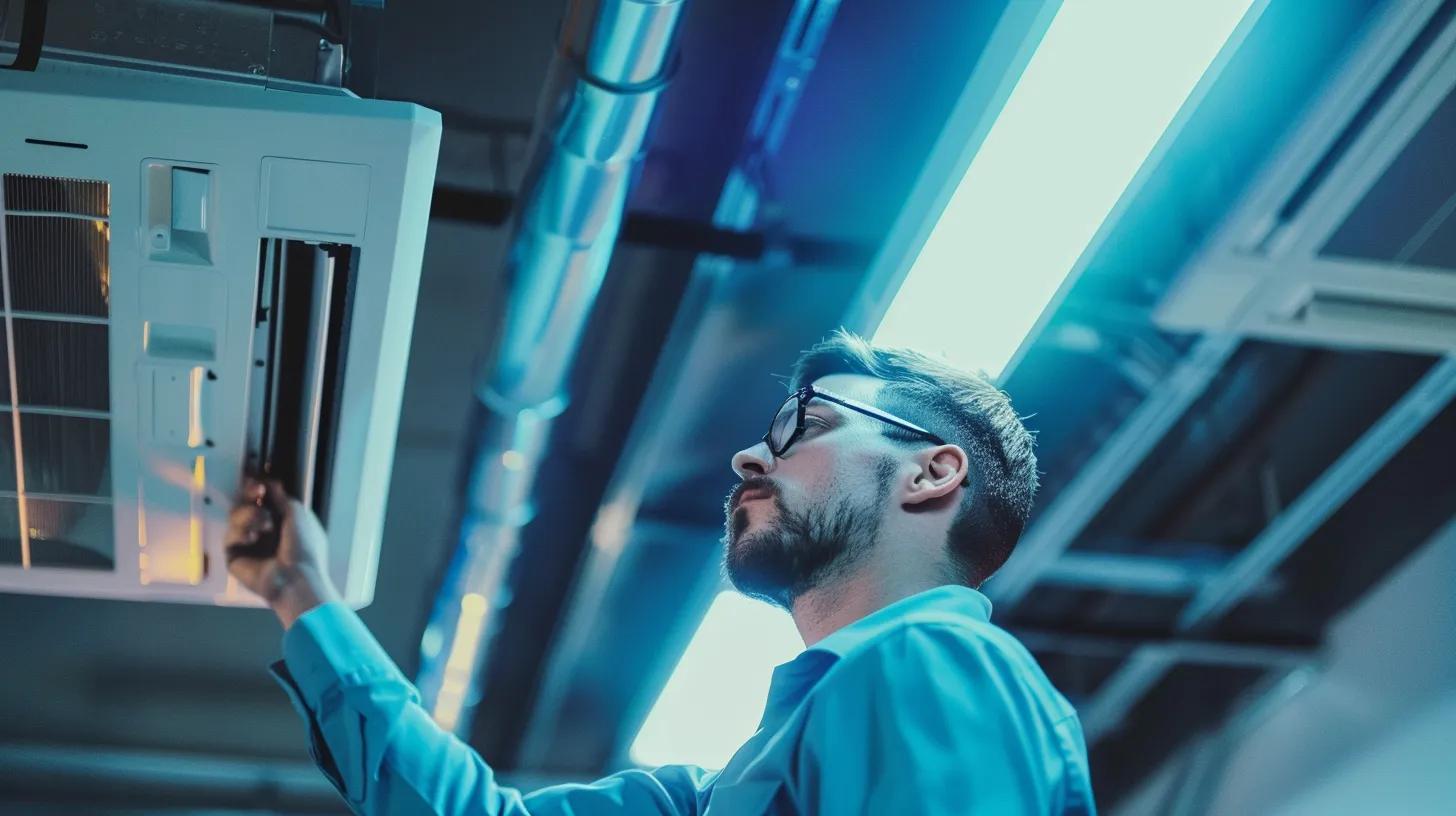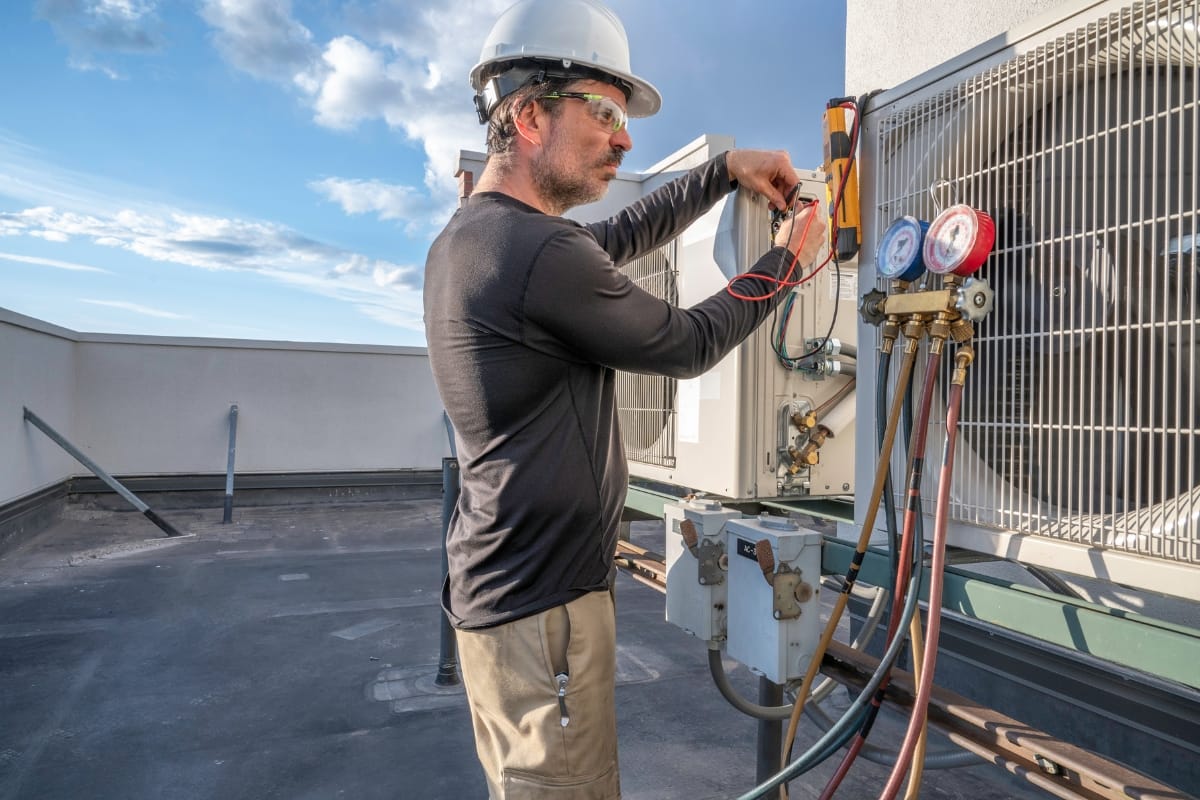
Selecting the right HVAC installation for your Atlanta business is a critical decision that impacts employee comfort, customer experience, operational costs, and system reliability for years to come. The unique demands of Georgia’s climate, coupled with the specific needs of your commercial space—whether it’s a retail store, office, or restaurant—require a tailored approach to system selection, sizing, and efficiency.
This guide walks you through the essential factors to consider, helping you choose an HVAC installation for businesses Atlanta that ensures optimal performance, energy savings, and long-term value.
HVAC Installation for Businesses in Atlanta Done Right the First Time
What Are Your Business’s Unique HVAC Needs In Atlanta?
Choosing the right HVAC installation for businesses Atlanta starts with understanding what your building actually needs day to day. Commercial HVAC is not one-size-fits-all. A system that works well in a small professional office may struggle in a busy retail space, a restaurant, or a warehouse. The more clearly you define your requirements upfront, the easier it is to choose equipment that stays comfortable, runs efficiently, and does not create constant maintenance headaches.
A good starting point is to look at how your space is used, how many people are inside at peak times, and what conditions your work requires. That information helps determine system size, zoning strategy, ventilation needs, and whether you should prioritize humidity control, filtration, or energy performance.
How Do Building Size And Occupancy Affect HVAC System Selection?
Building size matters because it influences how much heating and cooling capacity you need, but square footage alone is not enough. Ceiling height, insulation quality, window exposure, and how the building is laid out can change the real load significantly. A tall warehouse with large doors opening throughout the day has different needs than a closed, interior office suite even if the square footage is similar.
Occupancy plays a major role, too. People add heat and humidity to a space, and higher foot traffic often means more doors opening, more outside air coming in, and more temperature swings. In a commercial office with steady occupancy, a properly sized system and consistent zoning can keep conditions even throughout the day. In a business with fluctuating traffic, like retail or a fitness studio, the system may need more responsive controls to handle peaks without overworking.
This is where zoning becomes important. Many commercial buildings have rooms that run hotter or colder because of sun exposure, equipment use, or layout. Multi-zone systems help prevent the common problem of one area freezing while another feels stuffy. If you are planning HVAC installation for businesses Atlanta, zoning is often one of the best ways to improve comfort without oversizing the equipment.
What Industry-Specific HVAC Requirements Should You Consider?
Industry needs can change what “the right system” looks like. Some businesses rely on tighter air quality standards, while others need stable temperature control to protect products or equipment. Healthcare environments often require stronger ventilation, higher filtration, and air management that supports infection control. For spaces like server rooms or data centers, precise temperature and humidity control is critical to protect sensitive equipment and prevent downtime.
Food service and hospitality have their own challenges. Kitchens create heat and grease, which can affect airflow and require dedicated ventilation. Restaurants also deal with frequent door openings and mixed comfort zones, especially when dining areas, kitchens, and storage spaces all have different needs. Manufacturing and warehouse spaces may need targeted conditioning in specific work zones rather than trying to heat or cool the entire volume evenly.
Regulatory requirements can come into play as well. Depending on your industry, you may need to meet ventilation standards, maintain certain temperature ranges, or follow local code requirements related to exhaust, fresh air intake, and equipment placement. During HVAC installation for businesses Atlanta, these factors should be addressed early so the system design supports compliance as well as comfort.
When you match the system to your building and your industry, you are not just buying equipment. You are investing in reliability, predictable operating costs, and a workspace that stays comfortable for employees and customers. That is the foundation of a smart HVAC installation for businesses Atlanta.
Which Commercial HVAC Systems Are Best For Atlanta Businesses?
When planning HVAC installation for businesses Atlanta, the “best” system usually depends on how your building is used, how many zones you need, and what kind of comfort and energy control you expect. Atlanta’s long cooling season and humid conditions can put steady demand on commercial equipment, so the right system is the one that can handle heat, manage moisture, and operate efficiently without constant troubleshooting.
Most commercial spaces end up choosing between rooftop units, split systems, and VRF systems. Each option can work well, but they are built for different building types and business priorities.
What Are The Features And Benefits Of Rooftop Units?
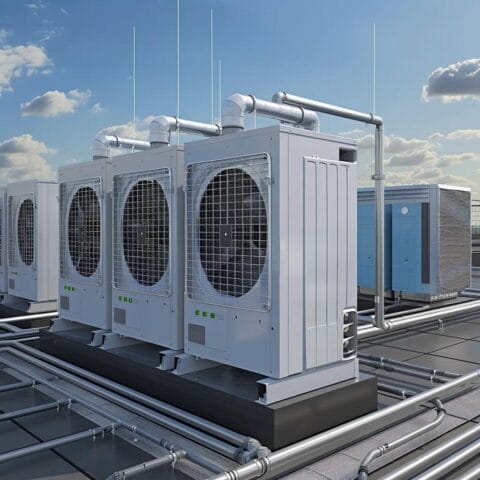
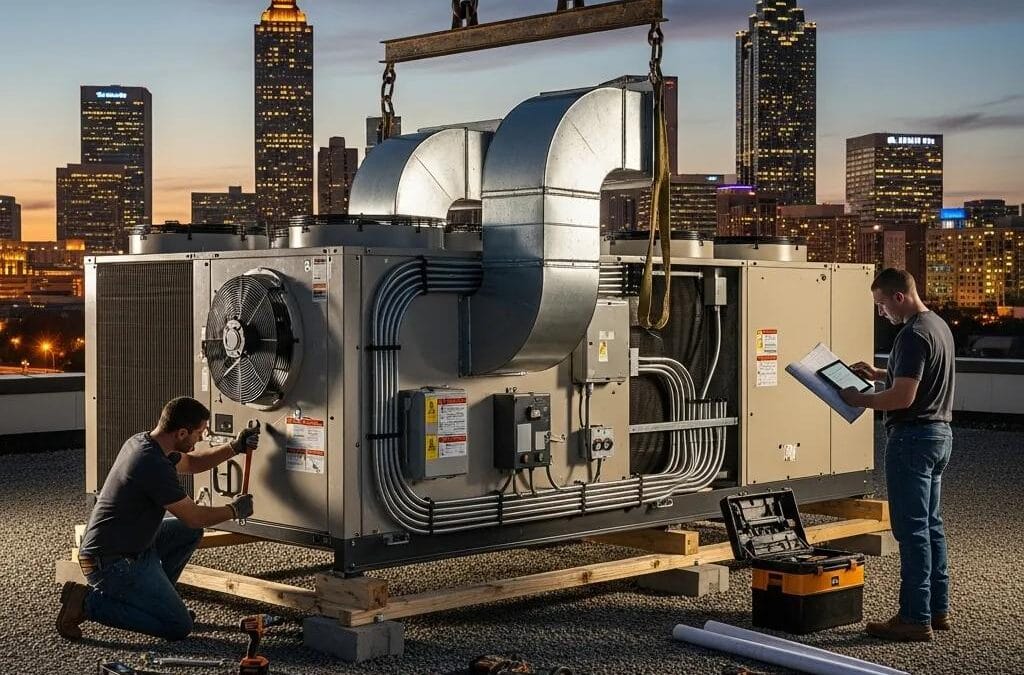
Rooftop units, often called RTUs, are common in retail, light industrial, and many office buildings because they keep equipment out of the way and make good use of roof space. With an RTU, the main components are housed in one package, which simplifies design and can make installation more straightforward than more complex multi-component systems.
From a day-to-day standpoint, RTUs are appealing because they free up interior mechanical space and keep most maintenance activity outside. That matters for businesses that want technicians to access equipment without interrupting staff or customers. Many RTUs also support straightforward zoning when paired with the right duct design and controls, which helps even out hot and cold areas in buildings with different sun exposure or varying occupancy.
Cost is another reason they remain popular. RTUs are often a practical solution when a business needs reliable cooling and heating without a highly customized system. That said, performance depends heavily on proper sizing, ductwork condition, and controls. A poorly sized RTU can short cycle, struggle with humidity, and drive up energy use. When HVAC installation for businesses Atlanta involves rooftop equipment, it is worth paying attention to airflow balancing and thermostat placement, since those details often determine comfort.
How Do Split Systems And VRF Systems Compare For Commercial Use?
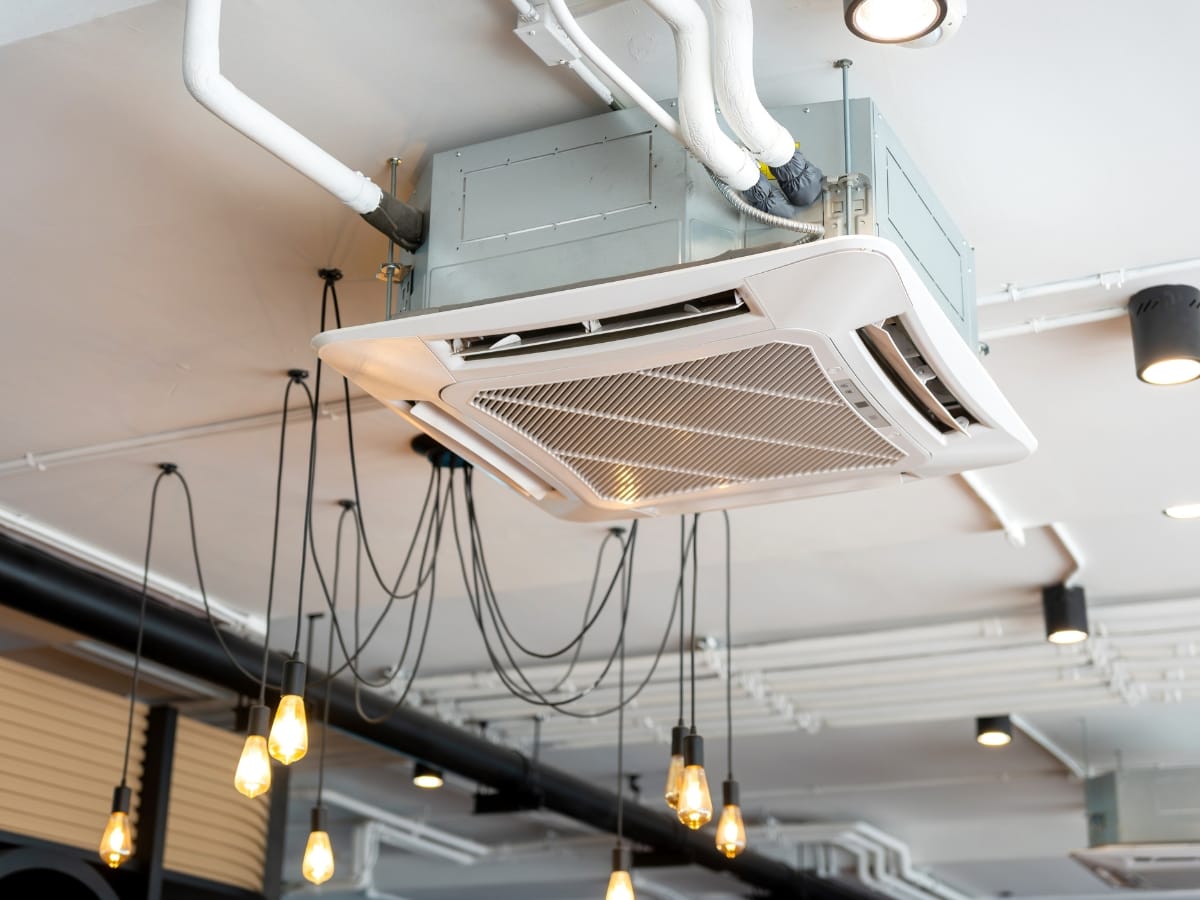
Split systems and VRF systems are both strong options, but they fit different types of buildings. A split system uses an outdoor condenser paired with an indoor air handler or coil. In many commercial settings, split systems work well when you need to serve a specific zone or smaller area, such as a suite in a multi-tenant building, a small office, or a sectioned-off workspace. They can be easier to plan around remodels and additions because indoor components can be placed where they best support the layout.
The main advantage of split systems is that they often come with a lower upfront cost compared to more advanced options. They also provide flexibility when zoning is needed, especially if the building is divided into areas with different schedules or occupancy patterns. The tradeoff is that as the number of zones increases, the system layout can become more complex, and efficiency can depend on how well everything is designed and controlled.
VRF, which stands for Variable Refrigerant Flow, is designed for buildings that need high-efficiency zoning and more precise control. VRF systems can deliver heating and cooling to different zones based on real-time demand, which can be a major advantage in larger offices, multi-story buildings, and mixed-use spaces where some areas run hot while others stay cool. Many businesses like VRF because it supports consistent comfort without overconditioning the entire building.
VRF systems often cost more at the start, but they can pay off over time through better part-load efficiency and stronger zone control. They are also a good fit when space is tight and ductwork is limited, since many VRF setups rely on smaller refrigerant piping rather than large duct runs.
If you are evaluating HVAC installation for businesses Atlanta, the most useful next step is matching the system type to your building’s zoning needs, operating hours, and comfort expectations. The right choice is usually the one that delivers steady performance in Atlanta’s heat and humidity without overspending on capacity you will not use.he specific advantages and considerations for VRF systems in commercial settings.
How To Choose The Right Commercial HVAC Contractor In Atlanta?
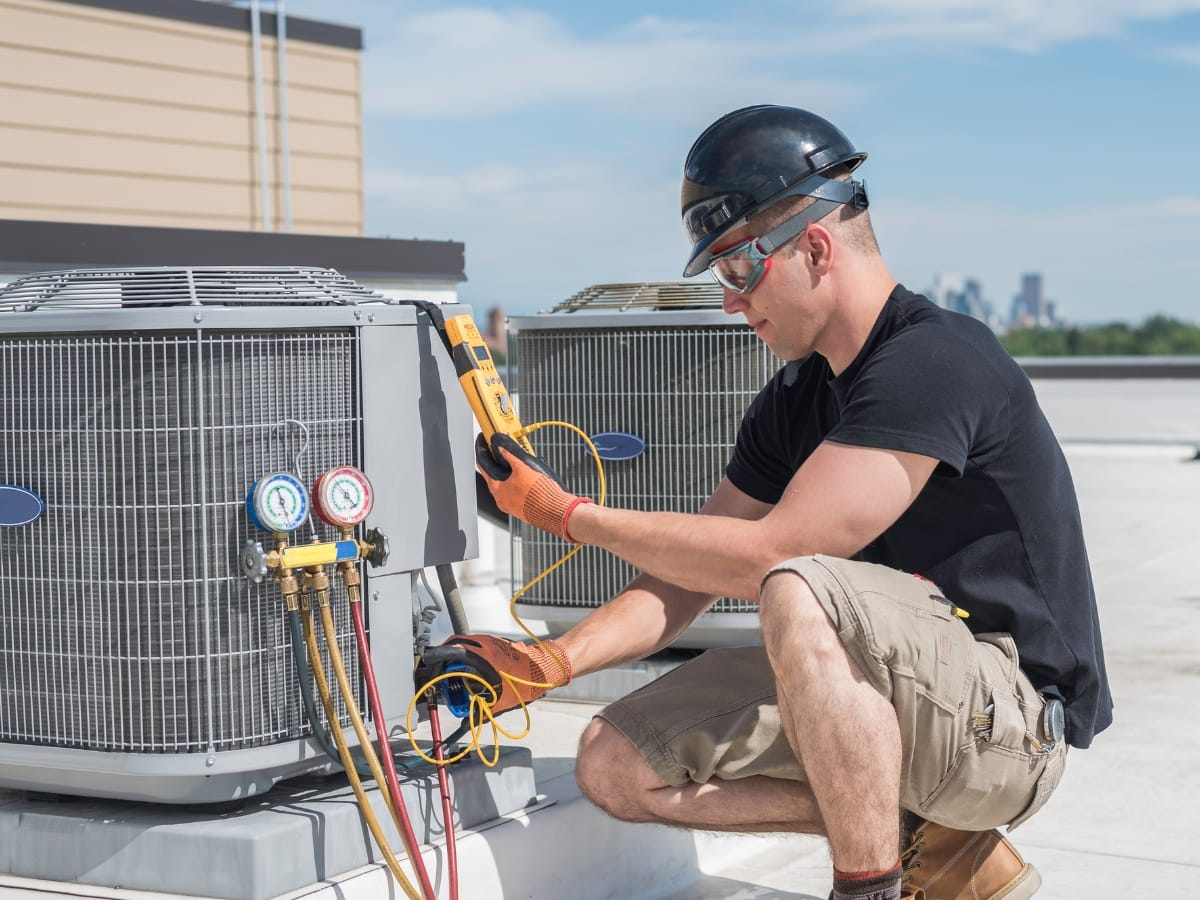
Choosing the right contractor is one of the biggest factors in a successful HVAC installation for businesses Atlanta. Even high-quality equipment can underperform if it is sized incorrectly, installed poorly, or not set up for your building’s layout and operating hours. A good contractor helps you avoid those problems by asking the right questions, documenting the scope clearly, and making sure the system meets local requirements.
Atlanta businesses also have practical concerns that go beyond installation day. You want a system that runs reliably during peak heat, keeps humidity under control, and does not require constant service calls. The contractor you choose will shape how well the system performs long after the paperwork is signed.
What Licensing, Certifications, And Experience Should You Look For?
Start with licensing and proof that the contractor is qualified to do commercial work in Georgia. Licensing requirements help ensure that the company is operating legally and understands baseline safety standards. From there, look for credentials that show training and competency, especially for technicians who will be working on your system. Certifications from recognized industry organizations can be a good signal that the team stays current on best practices.
Experience matters just as much as credentials, particularly in commercial settings. HVAC installation for businesses Atlanta can involve rooftop units, multi-zone layouts, ventilation requirements, and controls that are more complex than typical residential jobs. A contractor who regularly works in commercial environments is more likely to understand load calculations, zoning strategies, and how to design airflow that works across different rooms and occupancy levels.
When you are comparing contractors, ask about projects similar to yours. A provider who mostly works on small office suites may not be the best fit for a restaurant, warehouse, or medical environment where ventilation and temperature control demands are very different. The goal is to find a team that can design and install a system for your specific use, not just “a system that fits the square footage.”
Why Are Reputation, Reviews, And Communication Important?
Reputation is often the best predictor of what your experience will be like. Reviews can highlight patterns, such as whether the company shows up on time, communicates clearly, and stands behind its work when something needs adjustment. No contractor has perfect feedback, but you want to see consistency: clear scheduling, professional crews, and follow-through after installation.
Communication is especially important in commercial work because projects often involve multiple stakeholders. You may have a property manager, tenants, business owners, and sometimes build-out timelines that have to stay on track. A contractor should be able to explain options in plain language, document what is included in the quote, and set expectations about scheduling, access needs, and any potential disruptions.
It also helps to evaluate how they handle system design. A quality contractor will ask about comfort issues in the current space, problem areas, occupancy patterns, and equipment loads. They should also discuss ventilation and humidity control, since those are common challenges in Atlanta. If the contractor is willing to size equipment without visiting the site or without discussing how the building is used, that is a red flag.
What To Confirm Before You Sign An Installation Agreement
Before moving forward, make sure the quote clearly outlines what is included. It should specify the equipment model, scope of ductwork or controls work if applicable, and how the system will be tested and balanced. Ask how the contractor verifies performance after installation, such as checking airflow, verifying thermostat operation, and confirming that zones are delivering consistent temperatures.
For HVAC installation for businesses Atlanta, ongoing support matters too. You do not need a sales pitch, but you do want to know what happens if an issue comes up after the system is running. A contractor with clear warranty handling and a realistic service process can save you time and stress later.
The right commercial HVAC contractor is not just an installer. They are the difference between a system that struggles every summer and one that runs smoothly, keeps people comfortable, and supports your business without constant interruptions.
What Factors Influence Commercial HVAC Installation Costs In Atlanta?
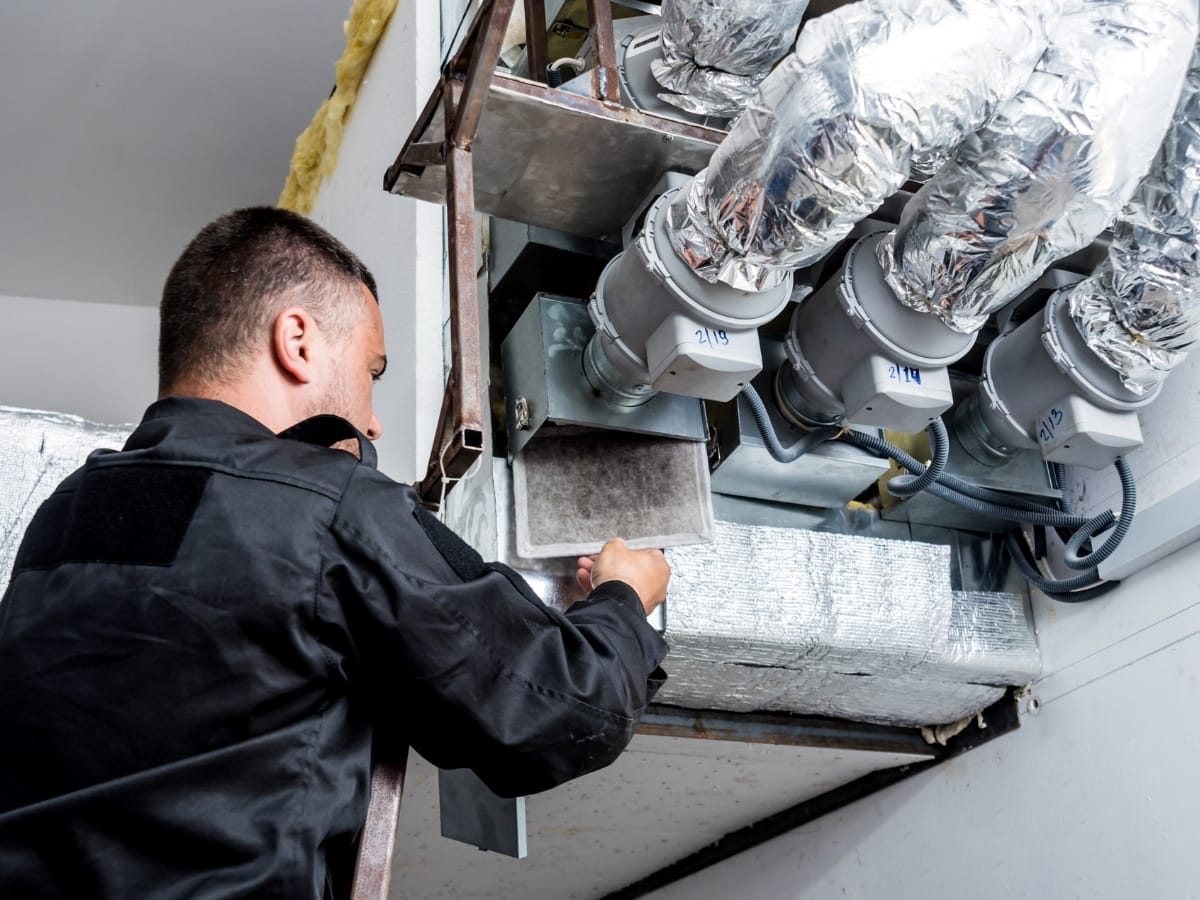
Budgeting for HVAC installation for businesses Atlanta can feel tricky because pricing is not based on equipment alone. The total cost usually reflects a mix of system design, installation complexity, and what it takes to meet code requirements for your specific building. Two businesses with similar square footage can get very different quotes if one needs major ductwork changes, new electrical work, or more ventilation to support its occupancy and use.
Understanding what actually drives the cost helps you compare estimates more realistically and avoid surprises during installation.
How Do Equipment, Labor, And Permits Affect Pricing?
Equipment is typically the biggest line item, and commercial systems vary widely in price depending on capacity, features, and configuration. A basic rooftop unit is often priced differently than a multi-zone split system or a VRF setup designed for larger buildings. Features like advanced controls, better humidity management, and improved filtration can also change the equipment cost. Higher-quality equipment can cost more upfront, but it may run more efficiently and hold up better under Atlanta’s summer demand.
Labor is the next major factor. Installation cost depends on how hard it is to place the equipment and connect everything properly. If your building has limited access, multiple stories, or a roof that requires special handling, labor can increase. Ductwork changes also add time. If existing ducts are undersized, leaky, or poorly routed, the system will not perform well without adjustments. Electrical work can affect labor costs too, especially if panels need upgrades, circuits need to be added, or controls require new wiring.
Permits and inspections are another piece that businesses sometimes overlook when budgeting. Commercial HVAC work often requires permits to make sure the installation meets local mechanical and building requirements. The permitting process can vary depending on the scope of work, and it may involve inspections for mechanical, electrical, and sometimes structural considerations. In a proper HVAC installation for businesses Atlanta, permitting should be treated as a normal part of the project rather than an unexpected add-on.
Why Building Conditions And System Design Matter
Beyond the core costs, the condition of the existing building can change the scope quickly. Older buildings may have outdated ductwork, limited insulation, or ventilation that does not match current needs. If you are replacing an old system, there may also be removal and disposal costs, plus adjustments to bring the new setup into alignment with current code or performance expectations.
Zoning and controls also influence pricing. A single thermostat in a multi-room space often leads to comfort complaints, especially in buildings with sun exposure differences or rooms with different usage patterns. Adding zoning and better controls can raise upfront cost, but it may reduce energy waste and improve comfort. For many businesses, that tradeoff is worth it, especially if certain areas must stay stable for equipment, customers, or staff productivity.
How Does Energy Efficiency Impact Upfront And Long-Term Costs?
Energy efficiency can change the price in two ways. First, higher-efficiency equipment often costs more upfront. Second, it can reduce monthly operating costs, which matters in Atlanta where cooling demand is high for much of the year. Ratings and efficiency features vary by system type, and the best option depends on how your building runs. A system that performs well at partial load, for example, can be valuable in businesses that are busy at certain times but quiet at others.
Efficiency is not just about the equipment label. Proper sizing and installation quality are just as important. Oversized systems can short cycle, struggle with humidity control, and wear out faster. Undersized systems can run constantly and still fall behind. In HVAC installation for businesses Atlanta, the most cost-effective outcome usually comes from matching the system to the building’s real load, then installing it correctly with balanced airflow and well-planned controls.
If you want a quote that makes sense, look for one that explains the scope clearly. The best pricing conversations are the ones that tie equipment choices, installation requirements, and long-term operating costs together, so you can make a decision based on value instead of guesswork.
What Is The Commercial HVAC Installation Process And Timeline?
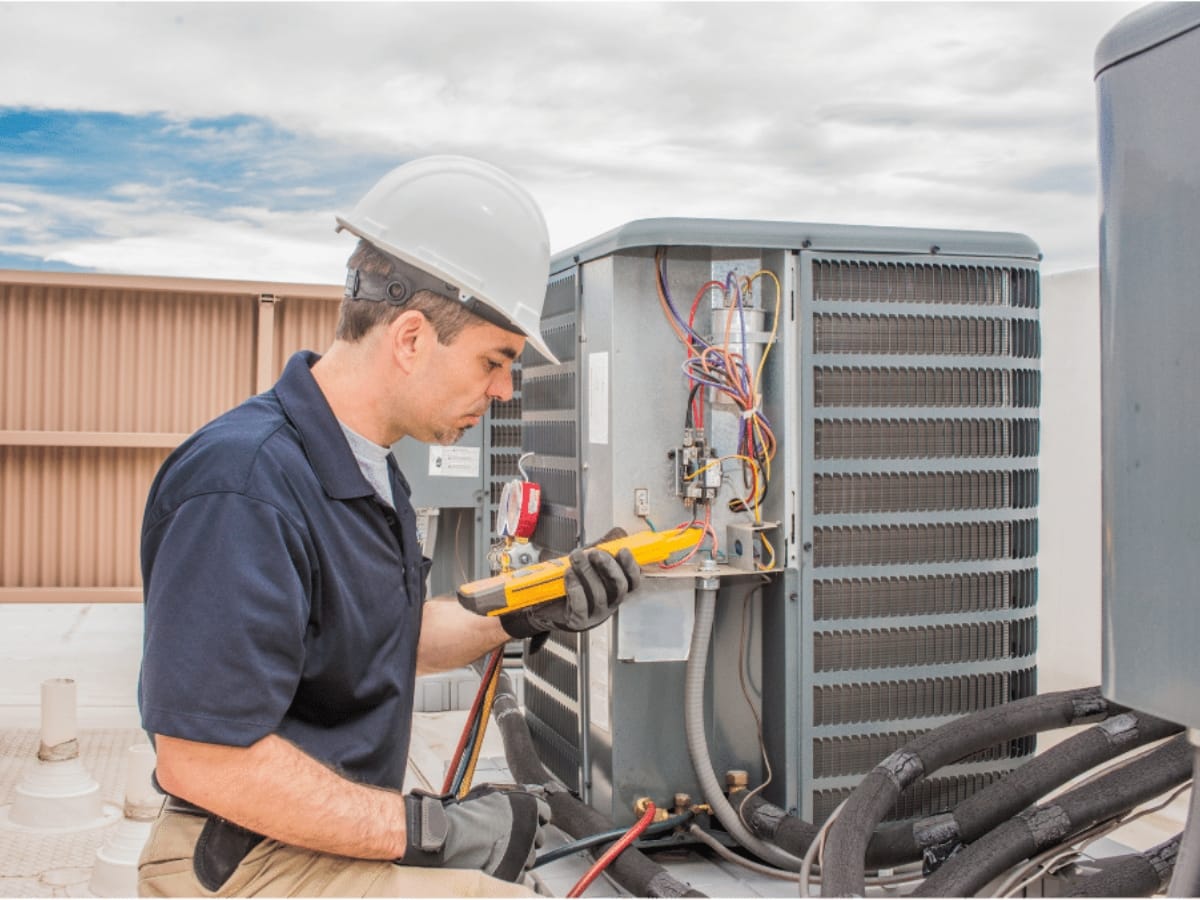
Planning HVAC installation for businesses Atlanta usually goes smoother when you know what the process looks like before work begins. A commercial system replacement or new install is not just a drop-in swap. It involves design decisions, coordination, and a final check to confirm the equipment is actually delivering the comfort and airflow it is supposed to. When business owners understand the steps and the typical timeline, it is easier to plan around customers, staff schedules, and any building access requirements.
What Are The Key Steps From Consultation To System Testing?
Most projects start with an on-site consultation. This is where the contractor reviews the building layout, asks how the space is used, and identifies any comfort issues you have been dealing with, such as hot zones, humidity problems, or inconsistent airflow. For HVAC installation for businesses Atlanta, this visit should also include a look at ductwork, electrical capacity, and ventilation needs, since those factors often shape the final system design.
After the site evaluation, you should receive a detailed proposal. The best proposals clearly outline equipment options, what is included in the scope, and what changes are needed to support the new system. That might include duct modifications, thermostat or controls upgrades, curb adapters for rooftop units, or ventilation adjustments. This is also where permits and inspection planning are typically handled.
Once the plan is approved, the project moves into scheduling and logistics. Equipment is ordered and delivered, and the installation is timed around access to the building. If a crane is needed for rooftop equipment, that is coordinated in advance. Good planning matters because it reduces surprises and helps keep work contained to the right areas.
Installation itself usually includes removing the old equipment if this is a replacement, setting the new units, connecting electrical and gas lines as needed, and tying in ductwork or refrigerant lines depending on the system type. Controls and thermostats are then installed and configured so zones operate as intended. This step is often overlooked, but it is critical. A high-end system will still perform poorly if the controls are not set up correctly or if the ductwork is unbalanced.
The process finishes with system testing and commissioning. That includes verifying proper operation, checking airflow, confirming that heating and cooling cycles are working normally, and making sure safety and performance standards are met. In commercial spaces, it can also include balancing airflow across zones so rooms do not end up fighting each other. For HVAC installation for businesses Atlanta, this final step is where comfort problems are either prevented or baked in, so it is worth taking seriously.
How Long Does Installation Typically Take For Atlanta Businesses?
There is no single timeline that fits every business, but most commercial installs fall into a range based on complexity. A straightforward replacement in a small space can sometimes be completed in a few days, especially if the new equipment matches the existing setup and ductwork changes are minimal. Larger projects, multi-zone systems, or installations that require significant ductwork, controls upgrades, or electrical work can take longer, sometimes stretching into multiple weeks.
Several factors influence the schedule. Building size and access are major ones. Rooftop work may require special coordination, and interior work can take longer if ceilings must be opened or if the building is occupied during the project. Permit processing and inspection scheduling can also affect timing, especially during busy seasons when demand is high.
The most realistic approach is to plan for a timeline that includes both installation and the final testing phase. Installation day is not the end of the job. System setup, control tuning, and verification are what help ensure the new equipment performs well from the start. When you account for that full process, HVAC installation for businesses Atlanta becomes much easier to schedule without disrupting operations.
How Can Maintenance Plans Maximize Your HVAC Investment and System Longevity?
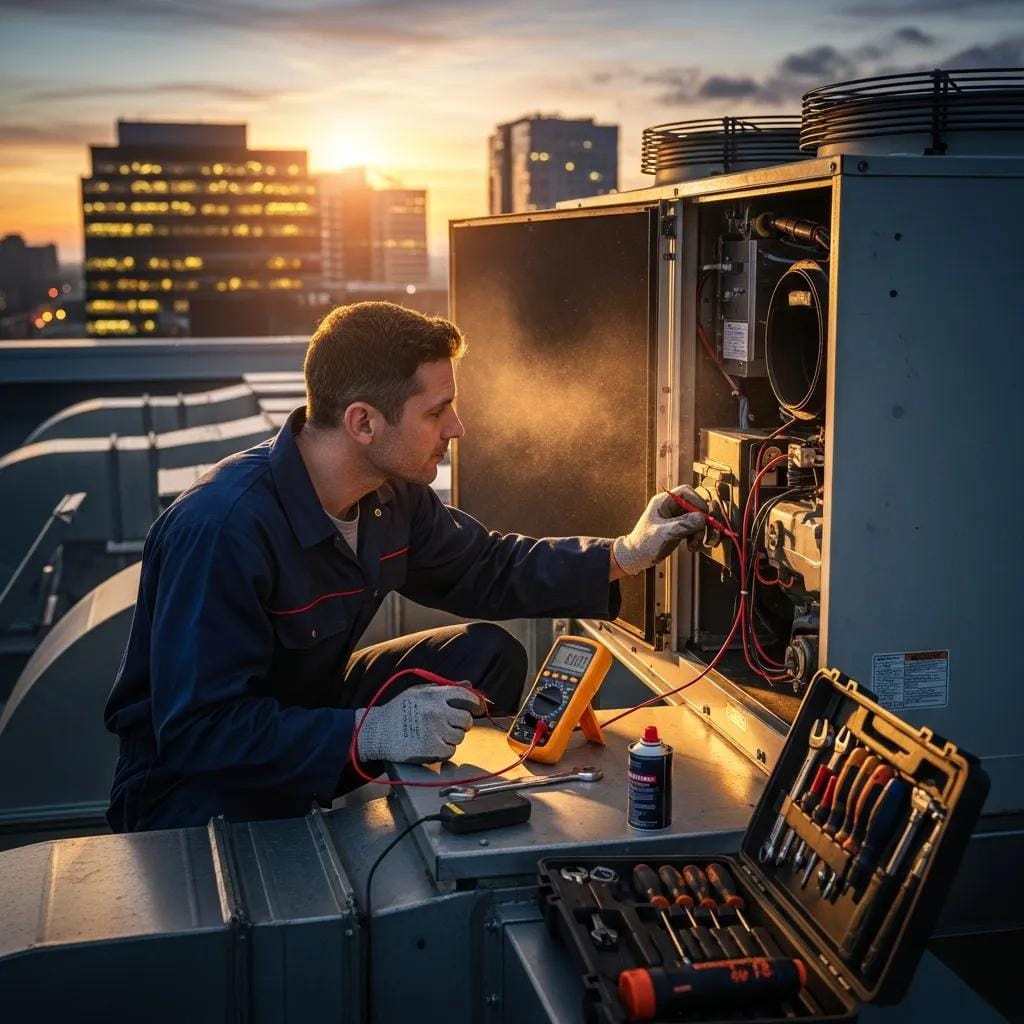
After HVAC installation for businesses Atlanta is complete, the next question is how to protect that investment. Commercial systems work hard in Atlanta’s long cooling season, and consistent use is exactly what wears parts down over time. Maintenance is not just about avoiding breakdowns. It is also about keeping the system running as efficiently as it did when it was new, so you are not paying extra every month for performance you are not getting.
A good maintenance plan gives you a predictable routine for inspections, cleaning, and small adjustments that prevent bigger problems later. It also helps business owners plan ahead instead of reacting to a failure in the middle of a heat wave when schedules are packed and downtime is expensive.
What Are The Benefits Of Preventative Maintenance Agreements?
Preventative maintenance agreements are popular for a simple reason: they make upkeep consistent. Instead of waiting for comfort complaints or a sudden shutdown, your system is checked on a schedule. Those visits typically focus on the components most likely to cause trouble, such as filters, coils, belts, drains, electrical connections, and thermostat calibration. When these items are ignored, you often get the same pattern: higher energy use, uneven temperatures, and eventually a breakdown that costs more than a tune-up ever would.
Another practical advantage is predictability. With a planned schedule, you can coordinate service around business hours, seasonal needs, and tenant schedules if you manage a multi-tenant property. Many businesses also prefer the accountability of documentation. If you ever need to reference service history, warranty requirements, or recurring issues, a maintenance record makes that easier.
From a risk standpoint, a maintenance agreement can also reduce emergency situations. That matters with HVAC installation for businesses Atlanta because summer heat and humidity can turn a minor issue into a major comfort problem quickly. Catching a failing capacitor, a clogged drain line, or a refrigerant issue early can prevent water damage, system strain, and uncomfortable working conditions.
How Does Regular Maintenance Improve Energy Efficiency And Reliability?
Energy efficiency tends to decline gradually, which is why it is easy to miss. A dirty coil, restricted filter, or poorly calibrated control can quietly push the system to work harder to achieve the same result. That extra strain shows up in utility costs and in wear on the equipment. Routine maintenance keeps airflow and heat transfer where they need to be, which helps the system cool and dehumidify efficiently, especially during Atlanta’s peak season.
Reliability improves for the same reason. Maintenance visits are designed to spot problems before they become failures. Loose electrical connections, worn belts, and drain line blockages do not always shut a unit down immediately, but they can create bigger issues if left alone. Regular inspections also help catch problems that affect indoor comfort, like uneven airflow between zones or thermostats placed in areas that misread the building’s true temperature.
For businesses, reliability is not just a convenience. When a system fails during peak demand, you may lose productivity, disrupt customers, or create conditions that are unsafe for certain operations. That is why maintenance should be viewed as part of the full cost of ownership. The value of HVAC installation for businesses Atlanta is not only in getting the system installed, but in keeping it performing consistently year after year.
If you want the system to last and operate the way it was designed to, maintenance is the simplest way to protect both comfort and operating costs. Over time, the businesses that maintain their equipment tend to see fewer surprises, steadier performance, and a longer service life from the system they invested in.
Conclusion
Choosing the right HVAC system and installer is a critical business decision that impacts your Atlanta facility’s comfort, energy efficiency, and operational budget for years to come. At Galgon HVAC & Mechanical Service, we provide expert commercial HVAC installations, ensuring you select the ideal system for your specific needs and benefit from our professional craftsmanship and reliable service. To request a quote or schedule a consultation for your project, call us at (404) 352-1500 or fill out the service request form on our website today. Let Galgon HVAC deliver the performance and peace of mind your business deserves.